Running a wellness business means juggling appointments, client care, inventory, staff management, and countless other responsibilities. Marketing often falls to the bottom of the priority list, yet it’s essential for growth. The solution? Marketing automation that works while you focus on what you do best: helping clients feel their best.
What Is Marketing Automation for Wellness Businesses?
Marketing automation uses technology to execute marketing activities automatically based on triggers, schedules, or client behaviors. Instead of manually sending emails, posting on social media, or following up with leads, you set up systems that handle these tasks for you.
For wellness businesses like spas, yoga studios, massage practices, and holistic health centers, automation means staying top-of-mind with clients without spending hours on marketing each week.
The ROI of Automated Marketing
Before diving into specific strategies, consider the tangible benefits. Wellness businesses using marketing automation typically see:
- Time savings: 6-10 hours per week previously spent on manual marketing tasks
- Increased engagement: 30-40% higher email open and click rates with personalized, timely messages
- Better retention: 25-35% improvement in client retention through consistent touchpoints
- More reviews: 3-5x increase in online reviews when requests are automated
- Higher revenue: 15-25% revenue growth from re-engaged past clients and nurtured leads
The initial setup requires investment, but the ongoing return makes automation one of the highest-leverage activities for wellness business owners.
Email Drip Campaigns That Convert
Email drip campaigns are sequences of pre-written emails sent automatically based on triggers. For wellness businesses, effective drip campaigns include:
New Lead Nurturing Sequence
When someone downloads your guide to stress relief or signs up for your newsletter, trigger a series of emails over 2-3 weeks:
- Day 1: Welcome message with your story and philosophy
- Day 3: Educational content addressing their pain points
- Day 7: Client success story or testimonial
- Day 10: Special introductory offer for first-time clients
- Day 14: Invitation to book a consultation or discovery session
This gradual approach builds trust and educates prospects without aggressive selling.
Welcome Series for New Clients
After someone books their first appointment, send a series that:
- Confirms their appointment with preparation instructions
- Introduces your team and what to expect
- Shares parking or arrival information
- Follows up post-visit with care instructions
- Requests feedback and offers incentive for their next booking
This automated sequence creates a professional first impression and increases the likelihood of repeat visits.
Re-engagement Campaigns
Identify clients who haven’t booked in 60, 90, or 120 days and automatically send re-engagement messages:
- Personalized “We miss you” message
- Highlight new services or practitioners
- Offer a returning client incentive
- Share relevant seasonal wellness tips
These automated touchpoints recover clients who might otherwise be lost, often generating immediate bookings.
Social Media Scheduling for Consistent Presence
Your ideal clients scroll social media daily, but you don’t have time to post manually every day. Social media scheduling tools allow you to:
Batch create content: Dedicate 2-3 hours monthly to create and schedule a month’s worth of posts. Include wellness tips, behind-the-scenes photos, client testimonials, service spotlights, and promotional offers.
Maintain consistency: Regular posting (4-7 times per week) keeps your business visible in feeds and signals to algorithms that your page is active, increasing organic reach.
Post at optimal times: Schedule posts for when your audience is most active, even if that’s outside business hours. Analytics show when your followers are online, and automation ensures you post then.
Cross-post efficiently: Create once and automatically share to Instagram, Facebook, LinkedIn, and other platforms, adjusting format as needed.
Automated Review Requests
Online reviews are critical for attracting new wellness clients. Automated review requests dramatically increase the number of reviews you receive:
Timing matters: Send review requests 2-3 days after an appointment, when the positive experience is fresh but the client isn’t feeling rushed.
Make it easy: Include direct links to your Google Business Profile, Facebook page, or preferred review platform. The fewer clicks required, the higher your response rate.
Personalize the ask: Use the client’s name, reference their specific service, and thank them for choosing your business. Automated doesn’t have to mean generic.
Segment by satisfaction: Only send review requests to clients who rated their experience positively in post-appointment surveys. Direct dissatisfied clients to private feedback channels.
Birthday and Anniversary Campaigns
Personal milestone campaigns show clients you care while driving bookings:
Birthday messages: Automatically send birthday greetings 1-2 weeks before a client’s birthday with a special discount or complimentary add-on service. These messages typically see 45-60% open rates and generate spontaneous bookings.
Anniversary campaigns: Celebrate the anniversary of a client’s first visit or membership start date. Acknowledge their loyalty and offer an anniversary reward. This strengthens emotional connection and encourages continued patronage.
Holiday sequences: Set up automated campaigns for holidays relevant to wellness: New Year (fresh start), Valentine’s Day (self-love), Mother’s Day, summer wellness, fall reset, and holiday stress relief.
SMS Marketing for Immediate Impact
While email is effective, SMS messages have a 98% open rate and are read within 3 minutes on average. Use SMS automation for:
- Appointment reminders: Reduce no-shows with automated reminders 24 hours before appointments
- Last-minute availability: Fill cancellations by automatically texting clients who’ve expressed interest in specific services
- Flash promotions: Send time-sensitive offers that create urgency
- Post-appointment care: Send care instructions or wellness tips relevant to services received
Keep SMS messages brief, valuable, and not overly frequent to maintain effectiveness and avoid opt-outs.
Lead Nurturing for Package and Membership Sales
High-value offerings like service packages and monthly memberships require more touchpoints to convert. Automate lead nurturing by:
Segmenting by interest: Tag leads based on which services or packages they’ve inquired about, then send targeted content addressing specific concerns and benefits.
Educational content series: Create email sequences that educate prospects about the benefits of regular wellness care, cost savings of packages, and transformations from consistent treatment.
Social proof: Automatically include testimonials and case studies from clients who’ve purchased similar packages in your nurture sequences.
Gradual value build: Start with educational content, move to social proof, then introduce pricing and offers. This sequence respects the buyer’s journey.
Measuring Marketing Automation ROI
To ensure your automation efforts pay off, track these key metrics:
Email metrics:
- Open rates (target: 25-35% for wellness businesses)
- Click-through rates (target: 3-5%)
- Conversion rates (bookings per email sent)
- Unsubscribe rates (should stay below 0.5%)
Campaign-specific metrics:
- Revenue generated from birthday campaigns
- Reactivation rate from re-engagement emails
- First-time client conversion rate from lead nurture sequences
- Review request response rate
Overall business impact:
- Client lifetime value changes
- Retention rate improvements
- Time saved on marketing activities
- Client acquisition cost reduction
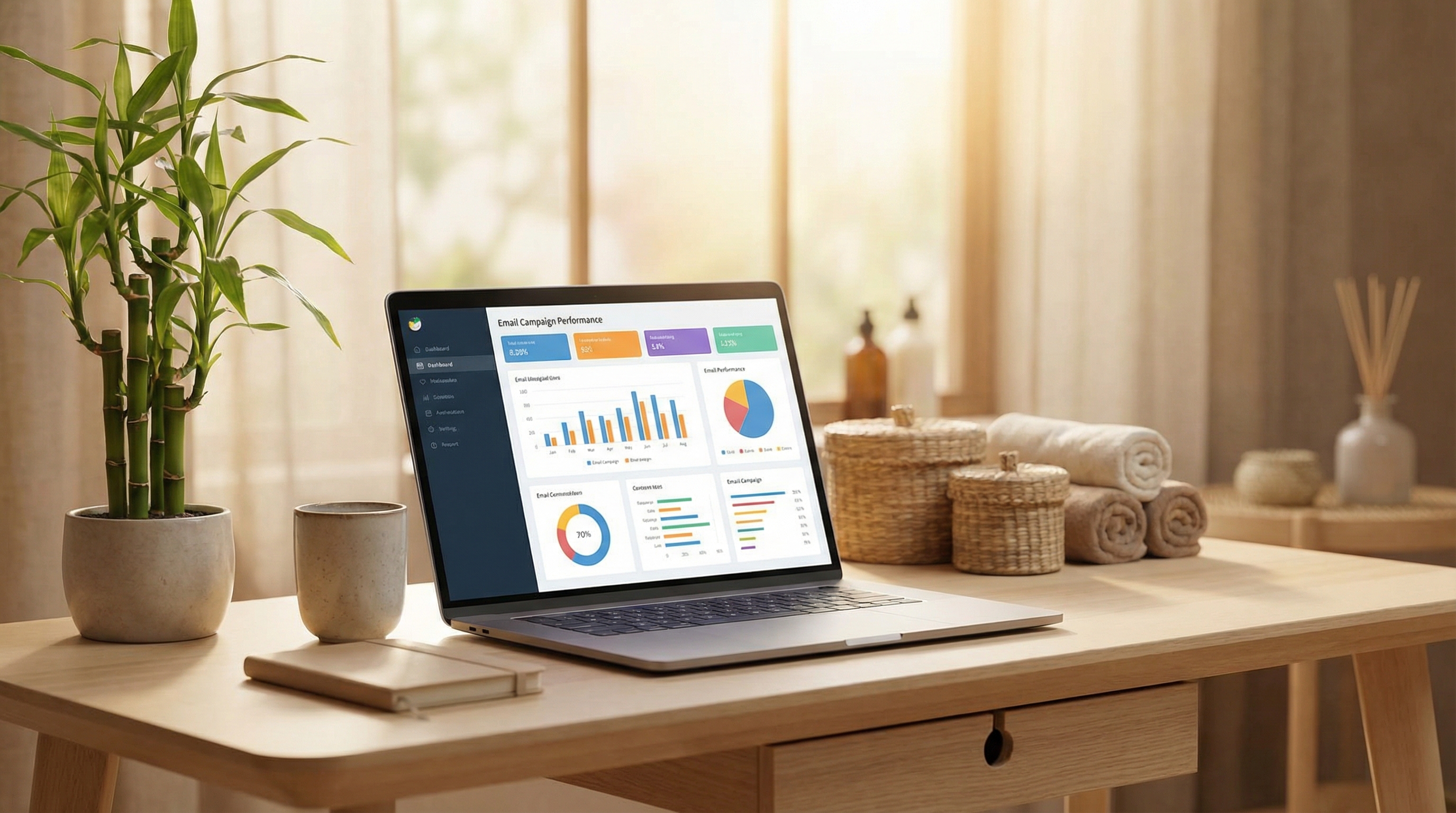
Most marketing automation platforms provide dashboards showing these metrics, making it easy to identify which campaigns deliver the best returns.
Getting Started with Marketing Automation
Begin your automation journey with these steps:
1. Choose your platform: Look for tools designed for wellness businesses or general platforms with strong email, SMS, and CRM capabilities. Many practice management systems include built-in automation.
2. Start with three campaigns: Don’t try to automate everything at once. Begin with welcome emails, appointment reminders, and review requests. Perfect these before expanding.
3. Build your content library: Create templates for common messages. Write with your authentic voice, focusing on value rather than sales.
4. Set up tracking: Implement proper tracking from day one so you can measure results and optimize over time.
5. Test and refine: Monitor open rates, click rates, and conversions. A/B test subject lines, sending times, and message content to improve performance.
6. Scale gradually: Once your initial campaigns are running smoothly, add birthday messages, re-engagement sequences, and social media scheduling.
Making Automation Feel Personal
The biggest concern about marketing automation is losing the personal touch that makes wellness businesses special. Avoid this by:
- Using conversational, authentic language: Write like you’re talking to a friend, not a marketing robot
- Including real stories and examples: Share genuine client experiences and your own insights
- Segmenting thoughtfully: Send relevant messages based on client interests, history, and preferences
- Monitoring responses: Set up notifications for replies and respond personally when clients engage
- Mixing automated and manual outreach: Use automation for consistent touchpoints, but personally reach out for special occasions or significant milestones
When done well, clients won’t realize your messages are automated. They’ll simply appreciate your consistent, valuable communication.
The Future of Your Wellness Marketing
Marketing automation isn’t about replacing the human connection that makes your wellness business special. It’s about ensuring you can maintain that connection consistently, even as your business grows. By automating routine marketing tasks, you free up time and mental energy to focus on delivering exceptional client experiences.
Start small, measure results, and expand your automation efforts as you see success. Within a few months, you’ll wonder how you ever managed without it. Your clients will stay more engaged, your schedule will stay fuller, and you’ll have more time to do what you love: helping people achieve their wellness goals.