
If you run a small massage studio, nail salon, or brow bar and you’ve started searching for “a Mindbody alternative,” you probably didn’t get there by accident. Usually it’s one of three things: the monthly bill is higher than you expected, the software feels built for a business three times your size, or you just want to get bookings live without a week of setup. All three are fair reasons, and all three are worth looking at honestly — including being fair to Mindbody, which is a genuinely powerful platform for the right business.
What Mindbody actually costs
Mindbody’s published pricing starts with a Starter plan at around 99 €/month per location, as that page renders for a European visitor — pricing pages in this category are geo-localised, so check what yours shows. There’s no free plan and no free trial listed — you’re paying from day one. Above Starter, the Accelerate and Ultimate tiers move to custom pricing, which typically means a sales conversation and a higher bill as you add staff, locations, or features.
To Mindbody’s credit, they’re upfront that the sticker price isn’t the whole story: total cost is “the plan you pick, plus any extras you add and any fees tied to how you sell and get paid.” In practice that means things like a branded mobile app, an AI concierge add-on, payment processing fees, SMS and email marketing fees, and fees tied to being discoverable in Mindbody’s consumer app can all stack on top of the base plan. That’s a normal way for platforms with a lot of optional depth to price themselves — it just means the number on the pricing page isn’t usually the number on your invoice. You’ll see all-in figures quoted around the web for what small studios actually pay. We’re not going to repeat one, because none of them trace back to anything Mindbody publishes. What we can point to is that only the entry tier has a price on it at all. Accelerate and Ultimate both say “Let’s talk”, so what it costs to grow into them isn’t something you can find out before a sales call. Ask for a quote that covers the add-ons you’d actually switch on.
| Mindbody | WellDesk | |
|---|---|---|
| Entry price | From 99 € a month, per location | Free for the first 100 shops, then 9.99 € a month |
| What the price scales with | Locations. Unlimited users on every tier | People taking bookings. Reception and admin logins are free |
| Higher tiers | Accelerate and Ultimate. Neither price is published — both are “let’s talk” | One plan. Everything is in it |
| Free tier | None published | The full product, free for the first 100 shops |
| Card processing rate | Not published | Stripe’s own rates |
| Contract terms | Not published beyond a note that it depends on your plan | Month to month |
| Where Mindbody is ahead | Room and resource management, deeper reporting, marketing automation and memberships. We have none of those | — |
List prices as shown on Mindbody’s own pricing page in August 2026, before tax. Two of its three tiers have no published price, so a full comparison is not possible without a sales call.
Per-location pricing behaves very differently from per-seat as a team grows, and the crossover is closer than most people expect. We work it through in our guide to what spa booking software actually costs.
Built for studios vs. built for a small shop
None of this means Mindbody is a bad product — it isn’t. It’s one of the most capable booking and membership platforms available, and there’s a reason gyms, yoga and pilates studios, dance and martial arts schools, and multi-location wellness chains use it at scale. Class scheduling with waitlists, tiered membership billing, multi-location reporting, and a large consumer-facing app for discovery are all real, hard problems that Mindbody has solved well. If that’s the shape of your business, that depth is the whole point, and it’s likely worth the cost and the learning curve.
The mismatch shows up when a one- or two-room appointment-based shop — a massage therapist, a nail tech, a lash and brow studio — ends up on a platform designed around that class-and-membership machinery. You’re not scheduling recurring classes. You’re not managing membership tiers across locations. You’re taking one-on-one appointments, and you end up configuring (and paying for) a system sized for a problem you don’t have.
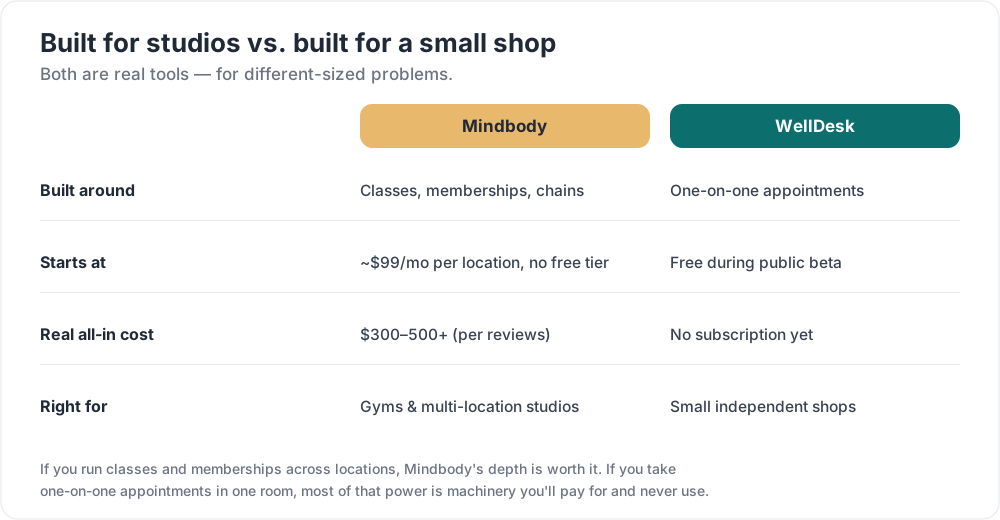 If you run classes and memberships across locations, that depth is worth it. If you take one-on-one appointments in one room, most of it is machinery you’ll pay for and never use.
Where WellDesk fits
WellDesk was built specifically for small independent wellness shops — the massage, nails, and brow/lash businesses that just need clean appointment booking without the studio-and-membership layer on top. It’s free right now for the first 100 shops, and those shops keep the price they signed up at. After that it’s one published plan — 9.99 € a month for the owner, plus 5 € for each extra person taking bookings, with nothing held back behind a higher tier. Card payments run through Stripe and carry Stripe’s own processing fees, the same as they would anywhere.
Every WellDesk shop also gets its own booking page at a dedicated subdomain (yourshop.welldesk.ai), indexed by Google from day one. In our experience with early shops, these pages can start appearing in local search results under the shop’s own name within a couple of weeks — though that will vary by market, competition, and how established the shop already is, so treat it as a reasonable expectation rather than a guarantee.
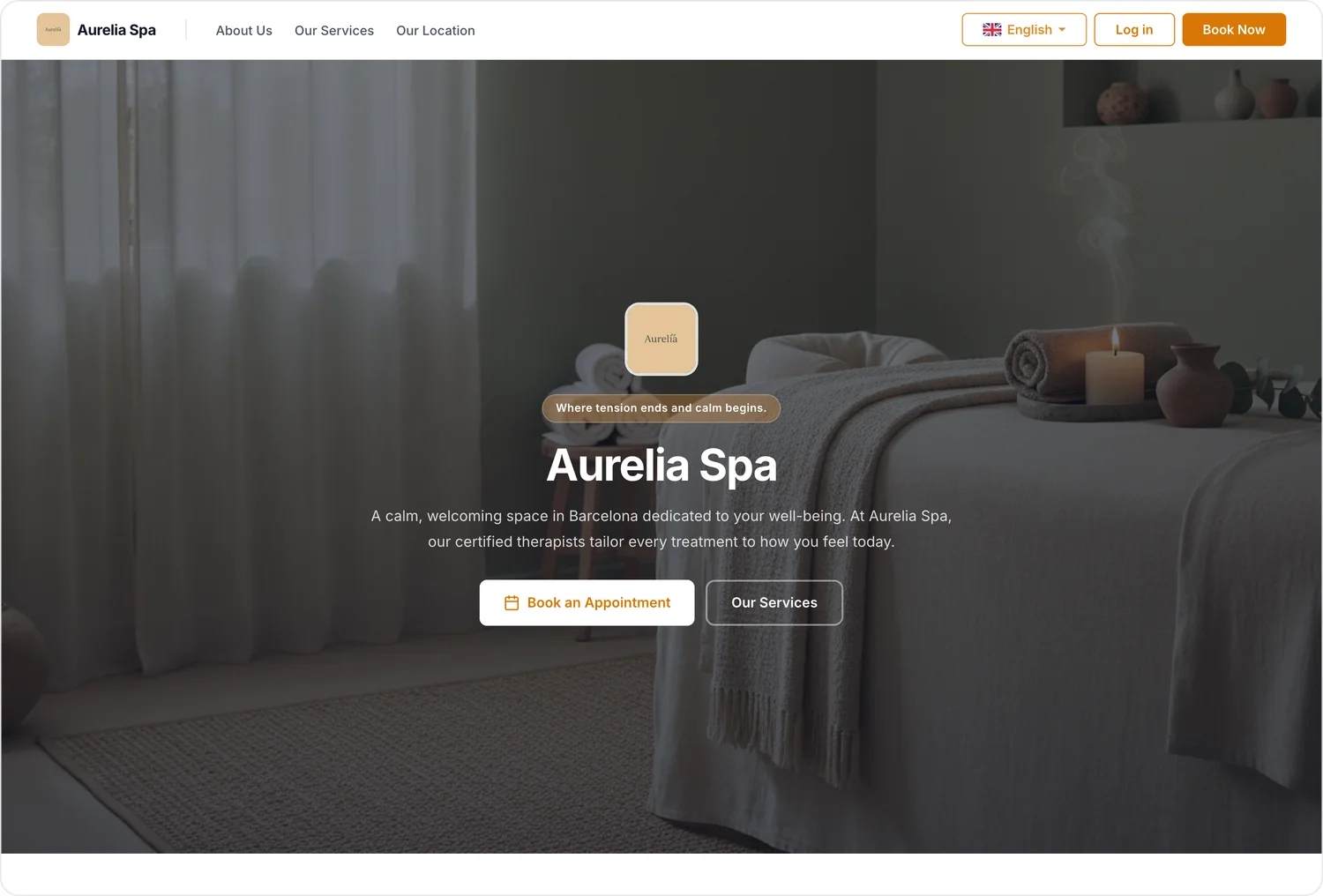 A whole shop’s booking page, live in an afternoon — no class schedules or membership tiers to configure first.
Being upfront about the other side: WellDesk is newer and much smaller in scope than Mindbody. There’s no class scheduling, no memberships engine, and no multi-location support today. Payments are Stripe-only — there’s no option to bring your own processor. If any of those are must-haves for your business, Mindbody (or a similarly full-featured platform) is the more sensible choice right now, and switching away from it wouldn’t be the right call.
The fair answer
If you run a multi-location studio with classes, memberships, and a team big enough to need enterprise-grade reporting, Mindbody’s power is genuinely worth what it costs — that’s exactly the business it’s built for. If you’re a small independent shop taking one-on-one appointments and you’ve been paying for (and clicking through) far more software than you actually use, that’s the gap WellDesk is built to fill: simple to set up, free for the first 100 shops, and focused entirely on getting your shop bookable and findable without the extra machinery.
You can see whether it fits your shop by checking what it costs and setting up your booking page — it takes a few minutes, and there’s no card and no trial clock.