

If you run a massage studio, a nail salon, or a small spa, there’s a good chance you’ve already looked at Setmore. It’s one of the most popular appointment schedulers out there, and for good reason — it’s affordable, it works, and it has a genuinely useful free plan. So why would a wellness shop owner look past it?
Usually it’s one of two reasons. Either the shop wants a booking tool built around treatments — service menus with durations and prices, in-person card payments, a flow that feels like it was designed for a spa rather than adapted from a generic calendar — or the owner wants a booking page that has a real shot at showing up in local search under the shop’s own name, not buried inside a shared scheduling platform. This post is about where Setmore is a great fit, and where a wellness-specific tool like WellDesk fits instead.
What Setmore actually costs
Setmore deserves credit here: its free plan is not a stripped-down trial. It’s $0 per month, forever, for up to 4 users and 200 appointments a month. That free tier includes a branded booking page, email confirmations and reminders, and both online and in-person payment collection, plus mobile apps. For a solo operator or a small team just getting started, that’s a lot of real functionality for nothing.
The limits show up once a shop grows past that: no SMS reminders, no two-way calendar sync, no recurring or video appointments, and Setmore’s own branding stays on your booking page. To remove those limits, Setmore Pro costs $5 per user per month if you commit to annual billing, or $12 per user per month billed monthly. Either way, it’s inexpensive for what it unlocks, and there’s also an optional Live Receptionist add-on at $99/month for US-based shops that want a human answering the phone.
| Setmore | WellDesk | |
|---|---|---|
| Free tier | $0 a month, up to 4 users and 200 appointments a month | The full product, free for the first 100 shops, no appointment cap |
| Branding on the free plan | Setmore’s, on your booking page | Yours |
| Paid plan, billed monthly | $12 per user a month | 9.99 € a month plus 5 € per extra person taking bookings |
| Paid plan, billed annually | $5 per user a month | No annual plan |
| Where Setmore is ahead | On price. At $5 per user billed annually it undercuts us at every team size, and we have nothing to answer it with | — |
| Where we would rather be judged | What the free tiers actually give you: theirs caps users and appointments and keeps its branding, ours is the whole product under your own name |
Setmore’s page served US dollars and ours are euros; we are not converting, because we have no sourced exchange rate. List prices as published in August 2026, before tax.
The pricing models across this market behave differently as a team grows, which we set out in our guide to what spa booking software actually costs.
If straightforward, affordable appointment scheduling is what you need, Setmore is a strong, honest choice — the free plan alone is worth trying before looking anywhere else.
General-purpose vs. built for your kind of shop
The real difference isn’t price — it’s what each tool was designed to do. Setmore is built to work for almost anyone who takes appointments: tutors, consultants, law firms, repair shops, clinics, salons. That versatility is exactly why it’s popular, and for a lot of businesses it’s the right tradeoff — one flexible tool instead of managing several specialized ones.
But “works for everyone” also means a wellness shop ends up adapting a general calendar to fit treatments, rather than using a tool that already thinks in services, durations, and prices. WellDesk was built the other way around: from the start, it’s meant for massage, nails, brows and lashes, and spa businesses specifically. Setting up a shop means building a service menu with real treatment durations and prices, not generic time slots. Payments are built around what a wellness shop actually does at the front desk — taking a card in person after a treatment — rather than being one option among several. It’s a narrower tool than Setmore, on purpose, shaped for one kind of business instead of every kind.
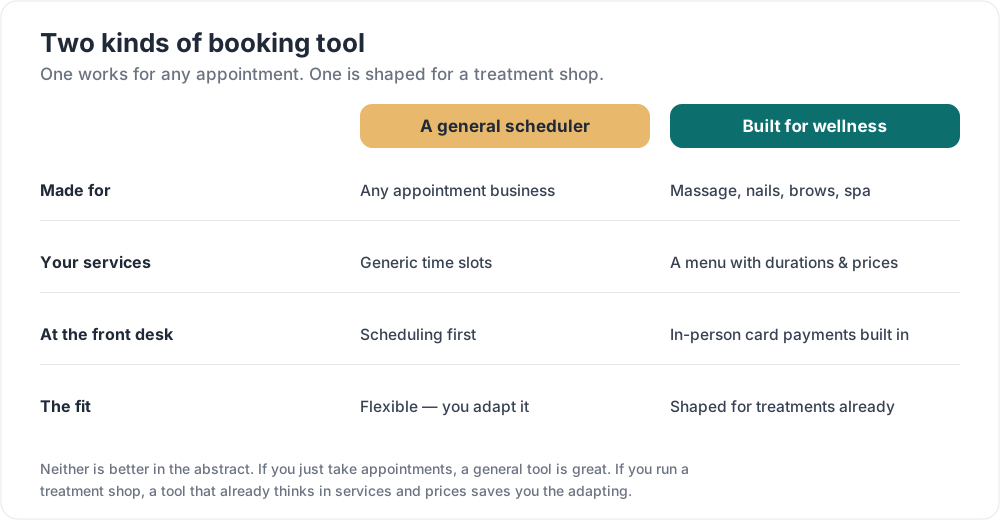 Neither is better in the abstract — a general tool is great if you just take appointments; a wellness-shaped one saves you the adapting.
Where WellDesk fits
If you’re a small independent wellness shop and you want software shaped specifically for that, here’s what WellDesk offers today. Every shop gets its own booking page at a shop-specific subdomain (yourshop.welldesk.ai), and because it’s a real, indexable page tied to your shop’s name, it has a genuine shot at showing up in local search results — in our experience, that can start happening within a couple of weeks of going live, though results will vary by shop and market. The booking flow, service setup, and in-person payment handling are all built around treatments rather than generic appointments.
WellDesk is free right now for the first 100 shops — the full product, not a capped free tier — and those shops keep the price they signed up at. After that it’s 9.99 € a month for the owner plus 5 € for each extra person taking bookings, on one plan with nothing held back behind a higher tier.
On price alone, that isn’t a win over Setmore in every case. If you pay Setmore annually, $5 per user undercuts us at every team size, and we have no annual plan to answer it with. Where we’d rather be judged is on what the free tiers actually give you. Setmore’s caps at 4 users and 200 appointments a month, and keeps Setmore’s branding on your booking page. Ours is the whole product under your own name. And when the paid plan does start, everything is in it; there’s no higher tier to move up to later.
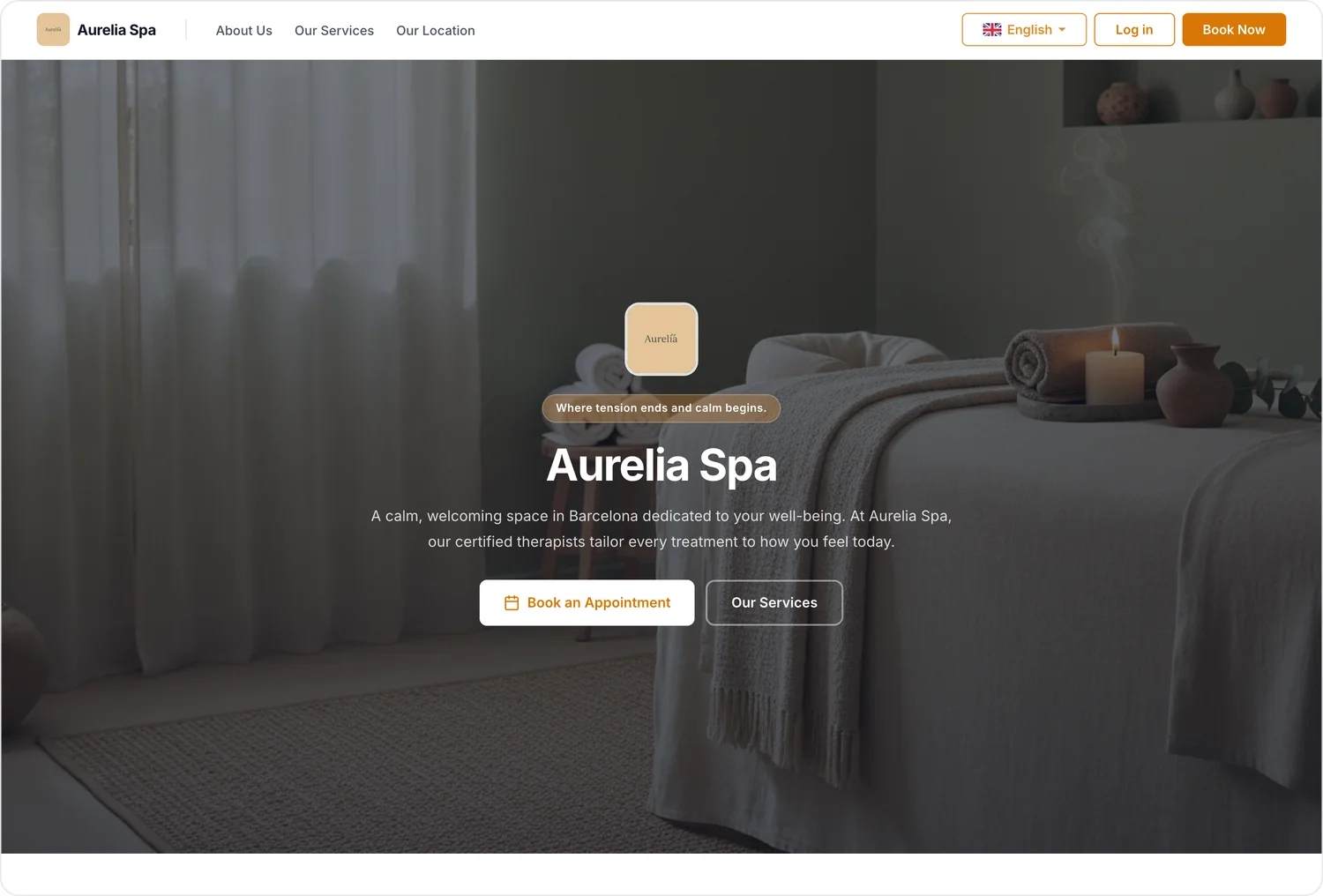 A real WellDesk booking page — the shop’s own page at aurelia-spa.welldesk.ai, indexed by Google under its own name.
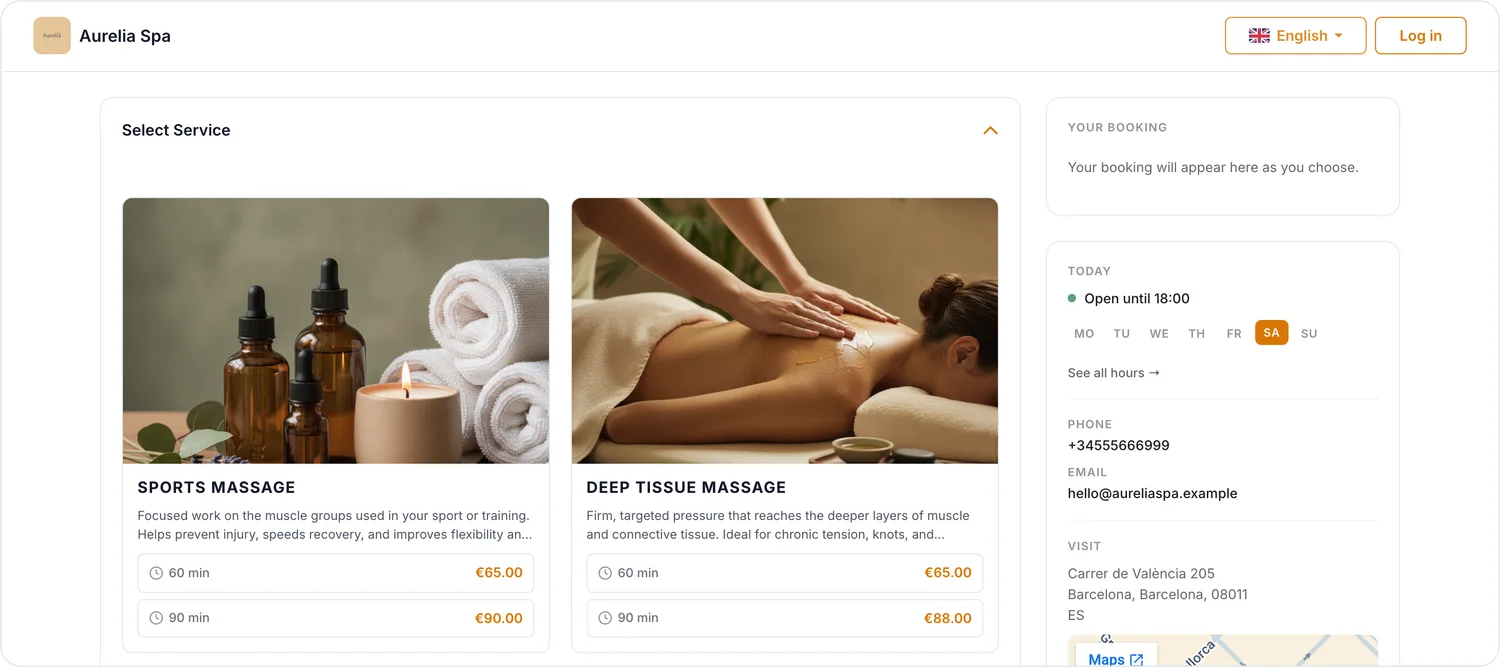 Services with real durations and prices, built in — not generic time slots you adapt to fit a treatment.
Being upfront matters here too. WellDesk is younger than Setmore and has a smaller feature set overall. It doesn’t yet support two-way calendar sync, so if you’re juggling appointments across Google Calendar and other tools, Setmore currently does that better. Payments run through Stripe only — there’s no option to plug in a different processor. And as a small, early operation, WellDesk doesn’t have the maturity or track record that a widely-used platform like Setmore has built up over years.
The honest bottom line
Setmore is a genuinely good product, and its free plan is one of the better deals in appointment scheduling — if general-purpose booking software covers what you need, it’s an easy recommendation, and you shouldn’t feel you have to look further. WellDesk exists for a narrower case: independent wellness shops that want their booking tool, and their booking page, built specifically around what a spa, salon, or massage studio actually does. If that’s what you’re after, and you’re comfortable with a newer, smaller, Stripe-only product still building out features like calendar sync, you can see what WellDesk costs and decide whether it fits your shop better than a general-purpose scheduler would.