Staff scheduling is one of the most challenging yet critical aspects of running a successful wellness practice. Poor scheduling leads to overworked therapists, frustrated clients dealing with unavailable appointments, and ultimately, lost revenue. But when done right, strategic scheduling becomes your competitive advantage, improving staff satisfaction, client experience, and your bottom line.
Whether you’re managing a spa, yoga studio, massage therapy clinic, or holistic wellness center, mastering the art and science of staff scheduling can transform your operations. Let’s explore proven best practices that wellness business owners use to create schedules that work for everyone.
Understanding Your Scheduling Needs
Before diving into tactics, take time to analyze your practice’s unique scheduling requirements. Every wellness business has different patterns based on services offered, client demographics, and local market dynamics.
Track your demand patterns over at least 3-6 months. Identify your busiest days (often Fridays and Saturdays for spas), peak hours (typically evenings and weekends for working professionals), and seasonal fluctuations (holiday rushes, summer slowdowns, or New Year wellness surges).
Assess service duration and complexity. A 90-minute deep tissue massage requires different scheduling considerations than a 30-minute facial. Some services demand specific expertise, while others can be performed by multiple team members. Map out which staff members are qualified for which services.
Calculate your true capacity needs. Factor in not just treatment time but also room turnover, client consultation time, and staff breaks. Most wellness practices need 15-20% more staffing capacity than their booked appointment hours to account for these realities.
Balancing Full-Time and Part-Time Staff
The right staffing mix is crucial for both flexibility and stability. Full-time staff bring consistency, develop deeper expertise, and often show stronger commitment to your practice’s culture and standards. Part-time staff provide the flexibility to handle variable demand without excessive labor costs during slower periods.
Build your foundation with full-time professionals who form the core of your team. These individuals should be your most experienced practitioners, capable of handling complex clients and mentoring newer team members. They provide the consistency that clients value and often become the face of your brand.
Supplement strategically with part-time staff to cover peak hours, weekend rushes, and seasonal demand spikes. Part-time positions also work well for specialists who offer niche services that aren’t needed full-time, such as acupuncture, reiki, or specialized bodywork.
Consider the financial implications carefully. Full-time staff typically require benefits, which increase total compensation costs by 20-30%. However, they often provide better value through higher productivity, lower turnover, and reduced training costs. Run the numbers for your specific situation rather than defaulting to one approach.
Implementing Effective Shift Planning
Thoughtful shift planning prevents both understaffing that frustrates clients and overstaffing that drains profitability. Start by creating shift templates based on your demand patterns, then adjust for individual circumstances and preferences.
Design shifts around client demand, not staff convenience. If your massage clinic sees most clients between 3pm and 8pm on weekdays, schedule your strongest team during those hours. Save early morning shifts for staff who prefer them and can handle the typically lighter demand.
Rotate less desirable shifts fairly among team members. Everyone should share weekend duty, holiday coverage, and closing shifts proportionally. Perceived unfairness in scheduling is one of the top causes of staff resentment and turnover in wellness practices.
Build in adequate transition time between shifts. Rushing from one client to another leads to mistakes, reduces service quality, and accelerates burnout. Schedule at least 15-30 minutes between appointments for room turnover, documentation, and mental reset.
Limit consecutive working days to prevent exhaustion. Most wellness professionals perform best with a maximum of 5-6 consecutive working days followed by at least 1-2 days off. Physical therapies are particularly demanding, so watch for signs of fatigue in your hands-on practitioners.
Leveraging Scheduling Software
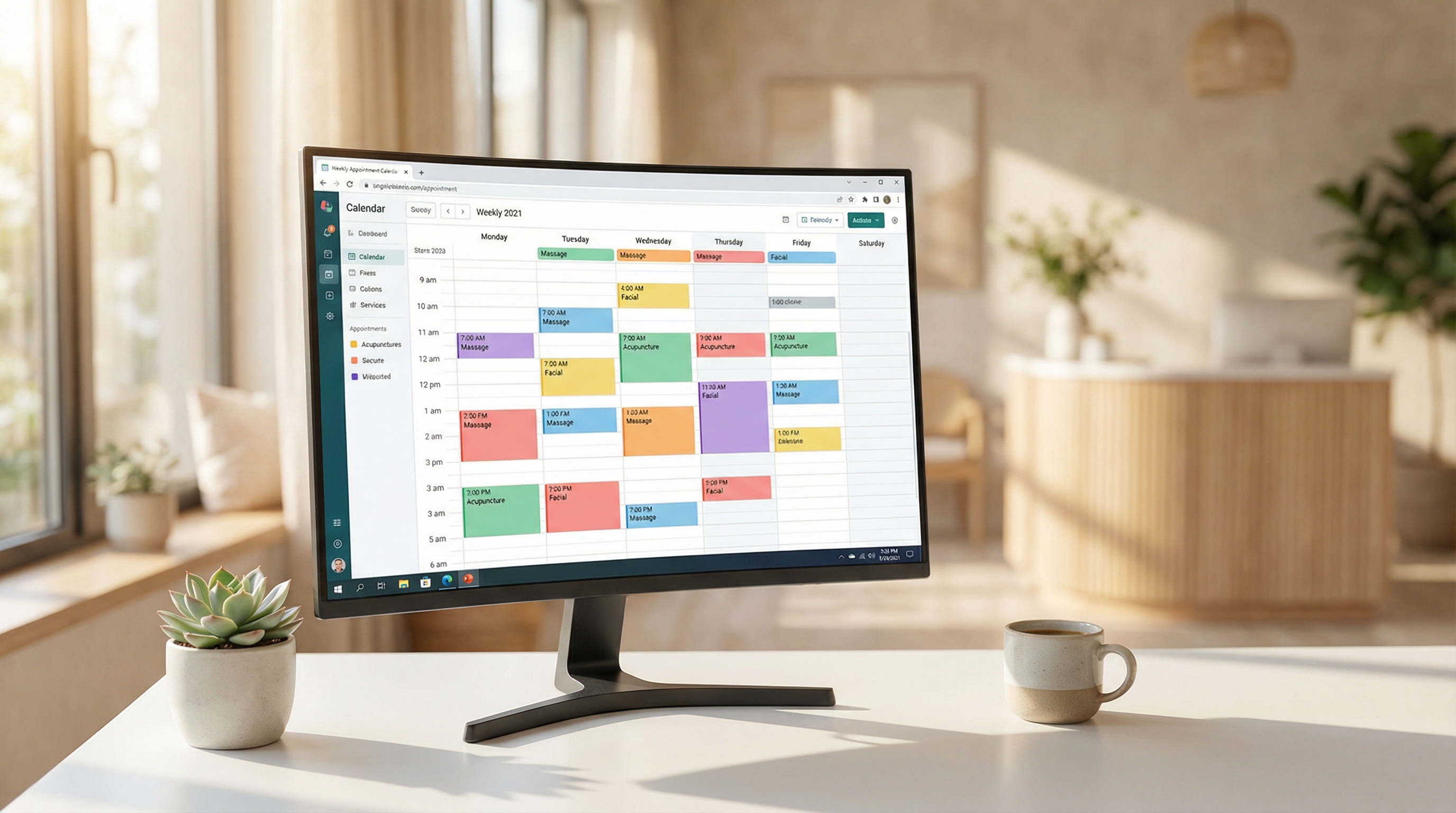
Manual scheduling with spreadsheets or paper calendars becomes unmanageable as your practice grows. Modern scheduling software automates complex logistics, reduces errors, and gives both managers and staff better visibility and control.
Key features to look for include drag-and-drop schedule building, automated conflict detection, integration with your booking system, mobile access for staff, time-off request management, and labor cost tracking. The best systems learn from your patterns and suggest optimal schedules.
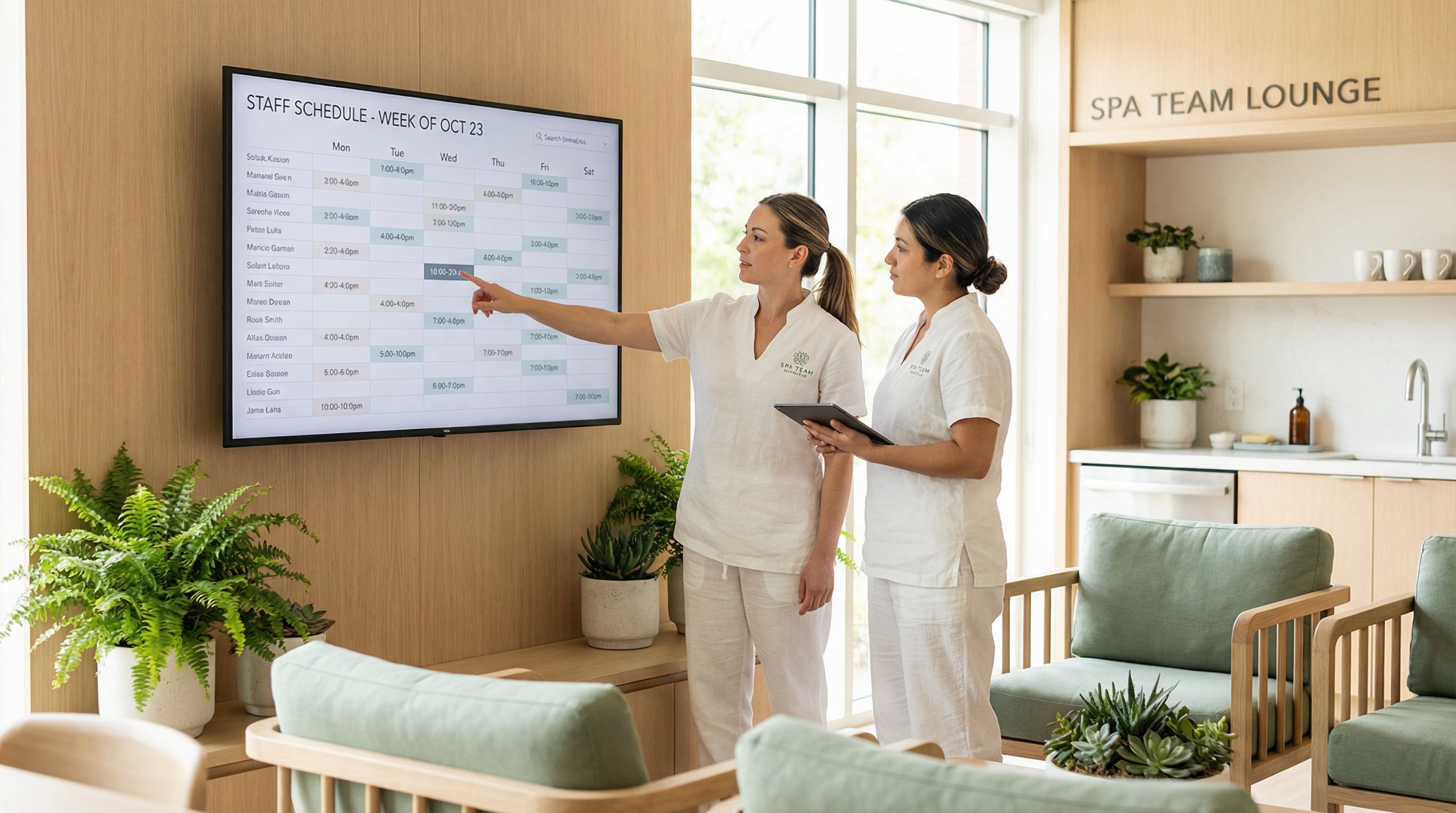
Enable staff self-service capabilities so team members can view schedules, request time off, swap shifts with colleagues, and update their availability without constant back-and-forth with management. This reduces your administrative burden while empowering staff.
Use data analytics to continuously improve. Good scheduling software tracks metrics like labor cost percentages, staff utilization rates, and overtime trends. Review these monthly to identify inefficiencies and opportunities for optimization.
Integrate with other practice management tools to create a seamless workflow. Your scheduling system should connect with your booking platform, point-of-sale system, and payroll software to eliminate duplicate data entry and reduce errors.
Managing Time-Off Requests and Coverage
Clear policies for time-off requests prevent scheduling chaos and staff conflicts. Establish transparent rules, communicate them clearly, and apply them consistently.
Set request deadlines based on schedule publishing timelines. For example, if you publish schedules two weeks in advance, require time-off requests at least three weeks ahead except for emergencies. This gives you time to find coverage without scrambling.
Create a fair approval process that balances first-come-first-served with business needs. During high-demand periods like holidays, you may need to limit how many staff can be off simultaneously or implement a rotation system for popular vacation weeks.
Build a coverage pool of on-call or per-diem staff who can fill gaps when regular team members are absent. Retired practitioners, instructors between full-time positions, or skilled students often welcome flexible opportunities to earn extra income.
Cross-train strategically so multiple team members can cover critical roles. If only one person knows how to perform a popular service or operate essential equipment, you’re vulnerable when they’re unavailable. Invest in training backups for every key position.
Optimizing for Peak Hours and Seasonal Demand
Wellness practices experience predictable demand fluctuations throughout the day, week, and year. Successful scheduling anticipates and accommodates these patterns rather than fighting against them.
Staff heavily during proven peak periods. If your spa is consistently fully booked on Saturday afternoons, ensure you have maximum coverage rather than trying to smooth demand artificially. Meet clients when they want service, not when it’s convenient for your staffing model.
Use dynamic pricing to shift demand when possible. Offering discounts for off-peak appointments can fill slower Monday mornings while reducing pressure on packed Friday evenings. This improves both revenue and work-life balance for staff.
Plan for seasonal patterns well in advance. If January is your busiest month due to New Year’s resolutions, start recruiting and training additional staff in November. For summer slowdowns, communicate reduced hours to staff early so they can plan accordingly.
Create attractive off-peak opportunities for staff who prefer those hours. Some practitioners love quiet Tuesday mornings for working with elderly clients or doing detailed work without the hustle of peak times. Match these preferences when possible to improve job satisfaction.
Preventing Burnout Through Smart Scheduling
Your staff’s wellbeing directly impacts service quality and business success. Burned-out practitioners provide subpar experiences, call in sick more frequently, and eventually leave for less demanding environments.
Monitor workload intensity, not just hours. Six hours of back-to-back deep tissue massages is far more physically demanding than six hours that include lighter services and administrative time. Balance intense client work with recovery periods.
Respect specialization and preferences when possible. If a yoga instructor particularly enjoys teaching gentle restorative classes, schedule them for those sessions when feasible. Working in areas of passion reduces the psychological toll of demanding work.
Schedule true breaks, not just gaps between clients. Staff need time to eat, rest, and mentally decompress. Many wellness practices fail by booking “breaks” that are actually consumed by room prep, client consultations, or administrative tasks.
Watch for warning signs like increased sick days, declining service quality scores, shortened patience with clients, or direct expressions of feeling overwhelmed. Address these proactively through schedule adjustments rather than waiting for burnout to fully develop.
The Strategic Advantage of Cross-Training
Cross-training team members across multiple services and roles provides scheduling flexibility while enhancing job satisfaction and career development.
Identify natural skill overlaps where training investment makes sense. A massage therapist might easily learn reflexology or hot stone techniques. A front desk coordinator might train in retail sales or basic esthetics services.
Create career pathways that incorporate expanded skills. Staff appreciate opportunities to grow their capabilities and earning potential. Cross-training transforms jobs into careers, improving retention.
Improve coverage flexibility dramatically. When multiple team members can perform popular services, you’re less vulnerable to call-outs and time-off requests. You can also offer more appointment availability to clients without hiring additional specialists.
Reduce staff boredom and repetitive strain by varying their work. Performing the same service repeatedly, especially physical therapies, increases injury risk and mental fatigue. Variety keeps work interesting and bodies healthier.
Putting It All Together
Effective staff scheduling isn’t about finding a perfect formula. It’s an ongoing process of analyzing data, listening to your team, adapting to changing demand, and continuously refining your approach.
Start with the fundamentals: understand your demand patterns, establish clear policies, and invest in proper tools. Build a balanced team of full-time and part-time staff that matches your needs. Create schedules that respect both business requirements and human limitations.
Most importantly, remember that your staff are the heart of your wellness practice. Schedules that support their wellbeing, respect their time, and provide growth opportunities will be rewarded with better service, happier clients, and a thriving business.
The practices that succeed long-term are those where staff scheduling is viewed not as an administrative chore, but as a strategic tool for building a sustainable, high-performing wellness business.